


Humidity in food packaging is one of those factors that consumers rarely notice, but it can completely change a product’s quality. It affects texture, appearance, freshness, and, in some cases, even food safety. A small amount of accumulated liquid or slight condensation can be enough to alter the final experience.
For years, packaging was understood simply as an element for containing products. Today, however, packaging plays a much more active role. Companies such as Ecoocel work precisely along these lines: developing solutions capable of protecting food, preserving its properties and controlling factors that directly affect its performance, such as moisture.
Why moisture in food packaging is a more important factor than it seems
When we talk about food preservation, we usually think about temperature or refrigeration, but moisture has an equally important influence. The problem is that it acts slowly and often goes unnoticed until visible changes begin to appear.
Excess moisture can lead to liquid accumulation, alter the texture of certain foods or reduce their shelf life. In addition, in certain situations it can create less suitable environments for maintaining product stability.
The curious thing is that the food itself often remains exactly the same; what changes is the environment created around it.
Not all foods react to moisture in the same way
Some products are especially sensitive because they generate liquids naturally or react quickly to environmental changes.
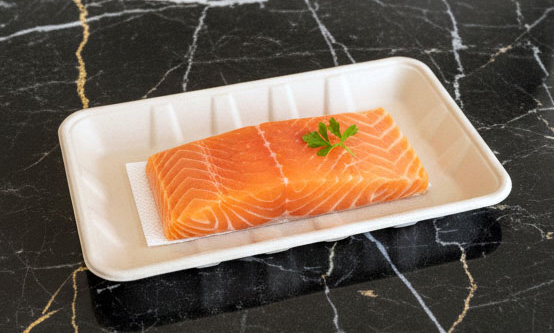
Meat and Fish
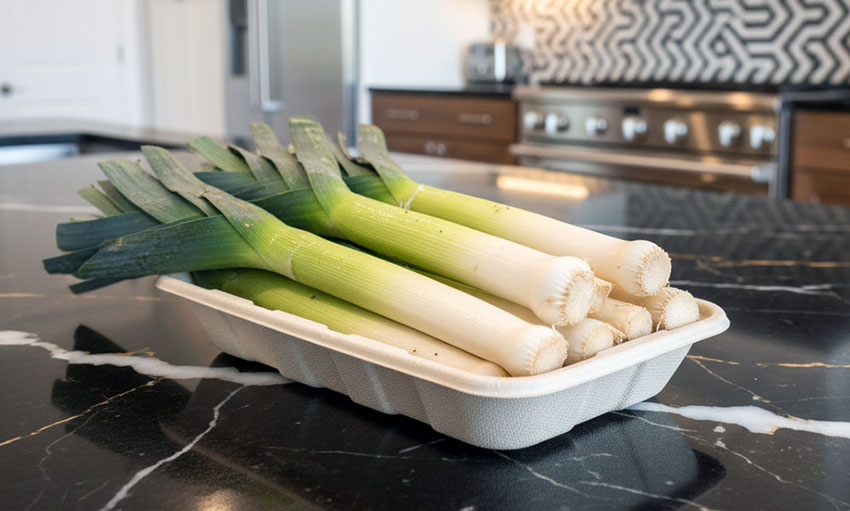
Fruit and Vegetables
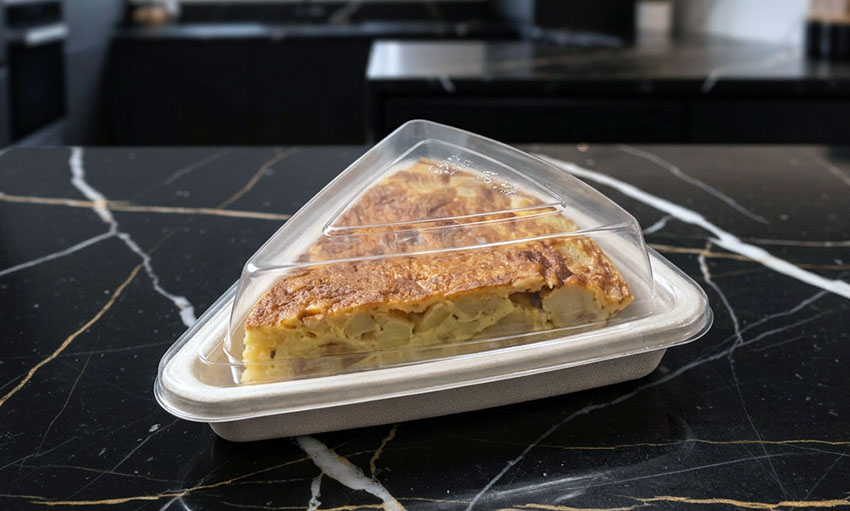
Prepared products
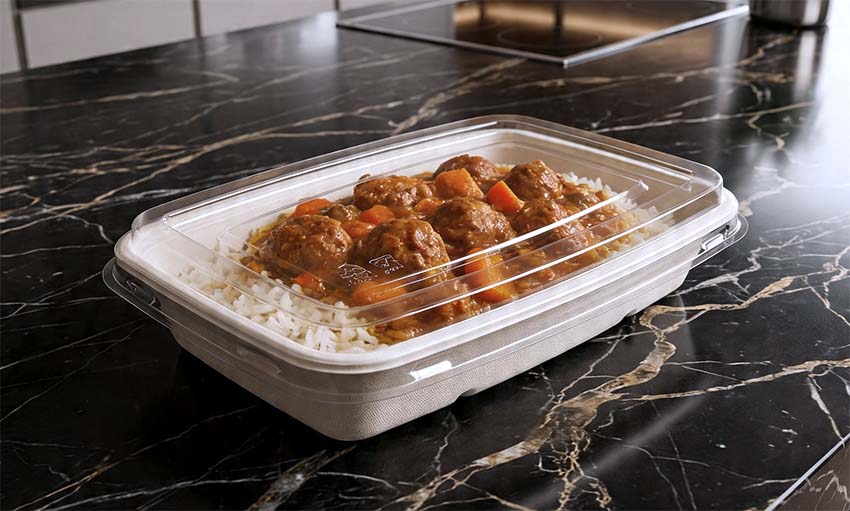
Ready-to-eat meals

Origin of the raw material
Renewable or responsibly sourced materials.
Production process
Reduction of emissions, optimized energy consumption, and environmental control.
Food safety
Reduction of emissions, optimized energy consumption, and environmental control.

End of life
Recyclability, real compostability, or reduction of the waste generated.
Fresh meat and fish
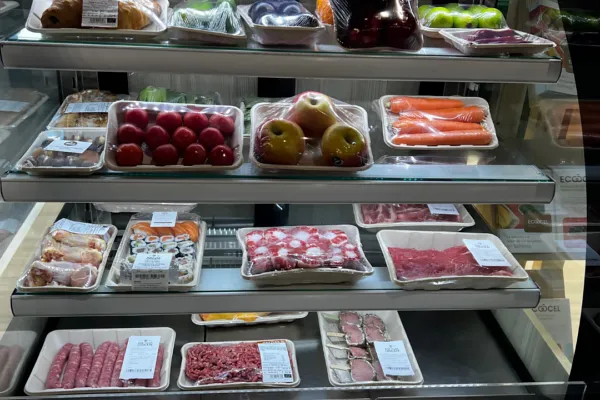
Fresh proteins release liquids during storage and transport. When those liquids remain in contact with the product for too long, the presentation changes and the perception of freshness may decrease.
In this type of product, in addition to maintaining good preservation, it is important to visually control the appearance of the food. A dry, clean product conveys a very different impression from one with visible liquid accumulation.
Ecoocel incorporates solutions such as Ecoocel Pad, a compostable absorbent pad developed to capture liquids and keep the product protected for longer.
Fruit and vegetables: small generators of moisture
Fruit and vegetables continue to breathe even after they have been harvested. This means they continue to release moisture and modify the internal environment of the packaging.
As a result, small droplets may appear inside, along with changes in texture or a premature loss of firmness. These are common situations, but that does not mean they should be accepted as inevitable.
Proper design helps reduce many of these effects.
Prepared products and ready-to-eat meals
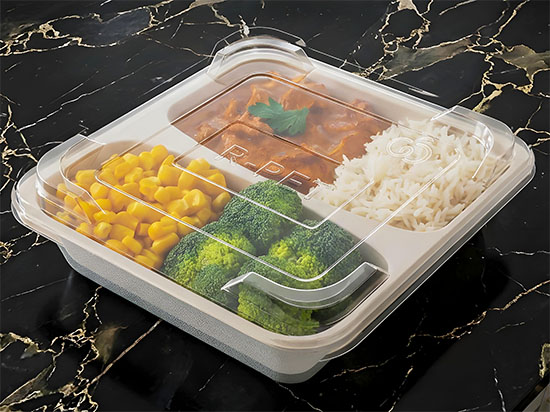
Prepared food has changed significantly in recent years. Supermarkets and convenience spaces offer more and more ready-to-eat options, where ingredients with completely different behaviors coexist.
Sauces, proteins, vegetables or side dishes can release different amounts of moisture within the same package. That is why packaging needs to consider more than dimensions or aesthetics; it must understand how the product will react throughout its entire journey.
How moisture in food packaging affects packaging performance
Excess moisture does not only affect the food; it also changes the behavior of the packaging itself. Some materials can react differently under certain conditions and alter the balance needed to preserve the product correctly.
In addition, liquid accumulation can reduce shelf life or affect the visual perception of the food. And in many cases consumers make a decision in just a few seconds, so appearance remains an important factor.

Packaging materials and their behavior in response to moisture
Not all materials react in the same way to the presence of moisture. Choosing the right type of packaging is essential to maintain product stability and avoid problems during storage and distribution.
Some solutions prioritize barrier properties against oxygen or water vapor, while others seek greater absorption or ventilation capacity. It all depends on the food and how it will behave throughout its life cycle.
For example:
- Barrier materials help limit the entry of external moisture
- Absorbent solutions make it possible to capture internal liquids
- Sustainable materials are evolving by incorporating increasingly advanced technical properties
- Combined systems make it possible to adapt the packaging to specific needs
The key is not to find a single perfect material, but to choose the right combination for each application.

What happens inside the packaging even though we cannot see it
Much more happens inside packaging than it may seem. Temperature, moisture and the behavior of the food itself interact continuously, creating a small environment that changes during storage or transport.
A simple change between a refrigerated chamber and an area with a different temperature can generate condensation and modify internal conditions. That is why modern packaging does not only protect the outside of the product; it also helps control the invisible environment created around it.
How to control moisture without complicating the process
The good news is that solutions now exist that can manage moisture efficiently without completely changing production processes.

Absorbent materials
Absorbent materials make it possible to capture liquids and prevent them from accumulating inside the packaging.
In addition to controlling moisture, they help maintain a better presentation, preserve product texture, increase food stability and improve the consumer experience
Heat-sealing systems
Sealing also plays an important role in the environmental control of the packaging.
A suitable system makes it possible to protect the food from external elements and maintain more stable internal conditions. In solutions developed by Ecoocel, compatibility with heat-sealing systems precisely facilitates this additional protection in fresh products.
Smart packaging design
Not everything depends on the material used. The design itself also changes the way moisture behaves.
Elements such as the internal structure, ventilation or space distribution can directly influence how liquids are generated or controlled inside the packaging.
In many cases, small modifications produce significant improvements.
Consequences of poor moisture management
When moisture is not controlled correctly, the impact appears at different levels and does not affect only the product.
The consequences can extend across the entire chain:
- Increase in losses and food waste
- Reduction in shelf life
- Increase in returns or incidents
- Worse shopping experience
- Higher logistics and operating costs
In addition, there is a less visible but equally important effect: brand perception. A product that arrives in poor condition can affect consumer trust even if the original quality was correct.
Natural solutions for a very real problem
For a long time, absorbent solutions were associated only with synthetic materials. However, the evolution of the sector has opened up new possibilities.
Ecoocel incorporates alternatives such as Ecoocel Pad, developed from highly absorbent cellulose fibers and materials of natural origin. These solutions make it possible to manage liquids released by meat, fish or fresh products while maintaining sustainability and food safety criteria.
What is interesting is not only the absorption capacity. It is also achieving it through solutions that reduce environmental impact and adapt to new market demands.

Small drops, big consequences
Moisture may seem like a minor detail, but small variations end up having important consequences. Liquid accumulation can accelerate product deterioration, generate losses and directly affect consumer perception.
Correctly controlling moisture in food packaging is not only about preventing condensation or excess liquids. It means protecting quality, maintaining the expected experience and reinforcing the trust behind each product.
Take the step toward sustainable packaging
If your company is looking to reduce its environmental impact without compromising functionality or quality, the time to act is now.
Discover how ecological packaging can be integrated into your operations and provide real value to your business.
Request information, analyze your needs and start the transition toward more responsible packaging today.